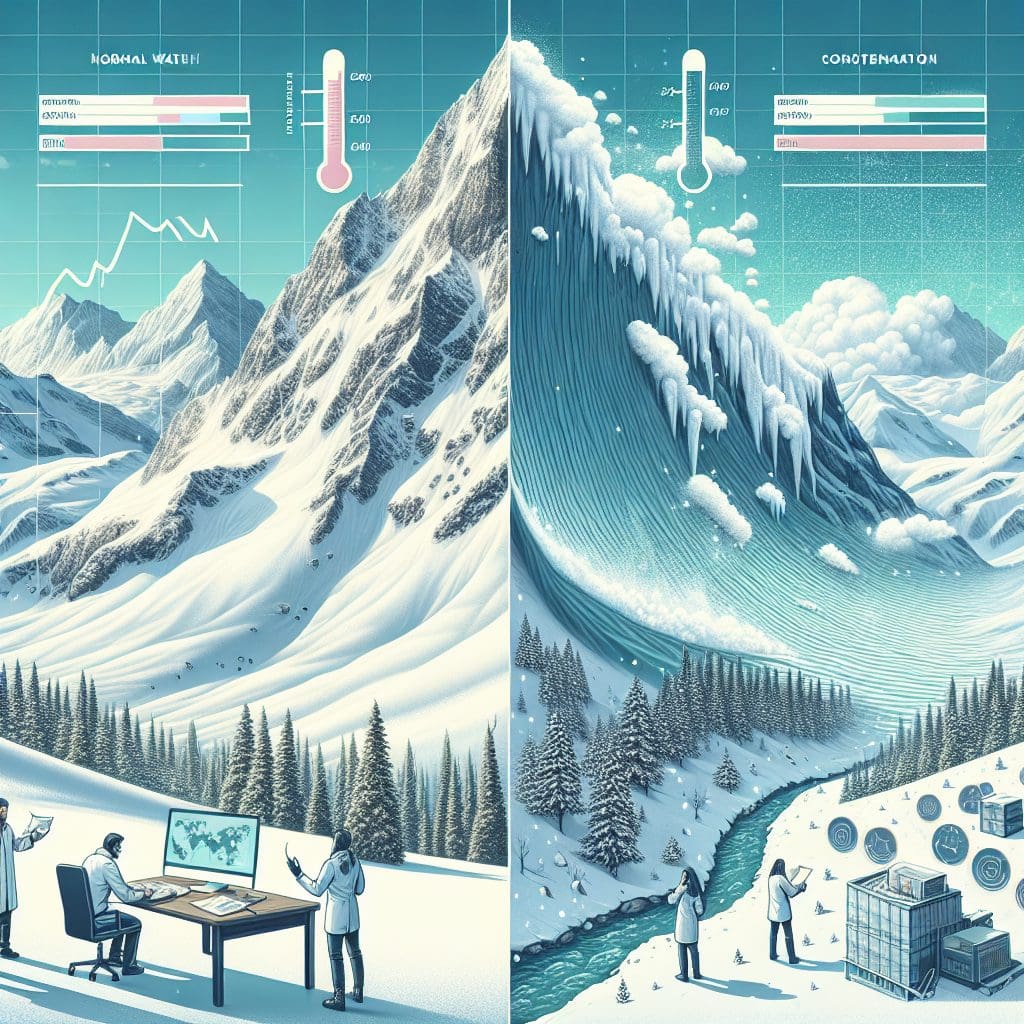
Climate change is significantly impacting avalanches and their predictability in various ways. As global temperatures rise, snow patterns and precipitation types are altered, leading to changes in the stability of snowpack. Warmer temperatures result in an increase in rain-on-snow events, which can destabilize layers of snow, making avalanches more likely.
Additionally, the variability in snowfall and temperature creates unpredictable conditions that challenge traditional forecasting methods. Models used to predict avalanche risk may need to be updated to account for these new extremes, making it harder for forecasters to assess danger levels accurately.
Changes in vegetation and the timing of seasonal snowmelt due to climate change can also affect avalanche occurrences. These shifts may lead to new avalanche paths or altered behavior in snowpack stability. Ultimately, the relationship between climate change and avalanches emphasizes the urgent need for enhanced monitoring and adaptive risk management strategies in mountainous regions.
For more details and the full reference, visit the source link below: